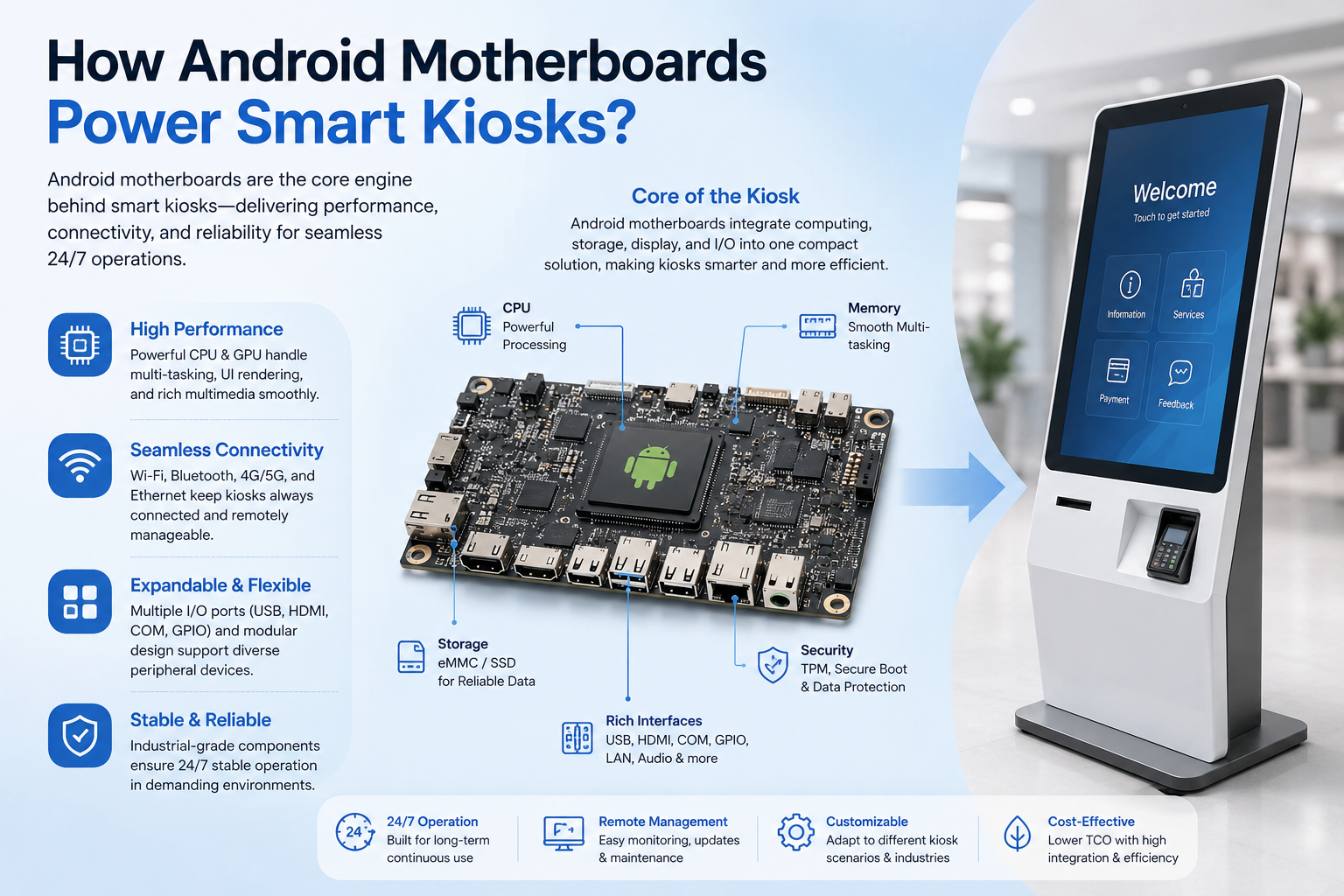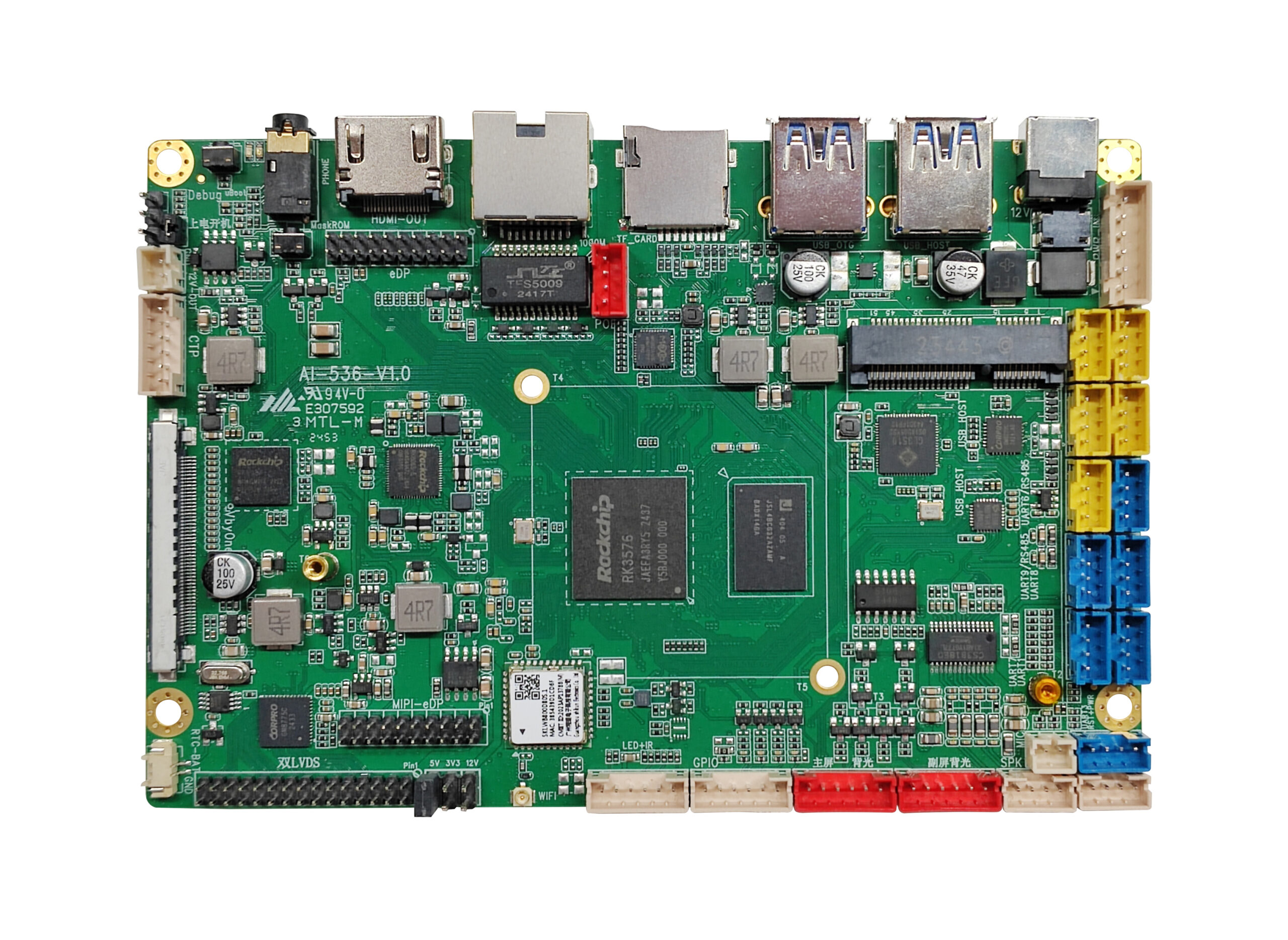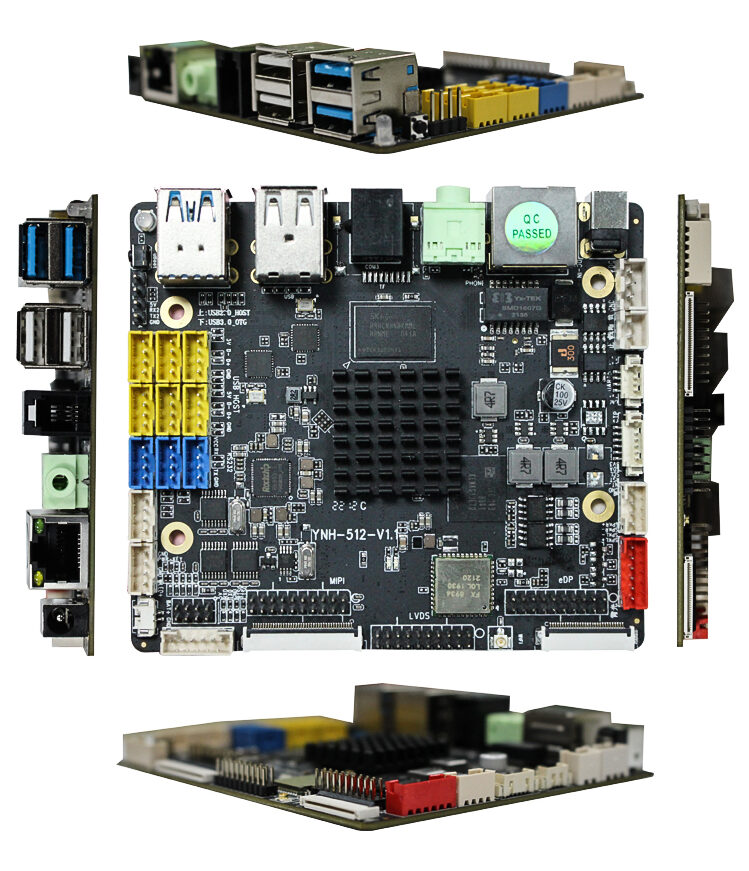
A custom Android board project can save development time and make your smart terminal device more suitable for the target application.
But before a supplier can recommend the right solution, they need to understand your project clearly.
If you are a brand owner, terminal device manufacturer, system integrator, or distributor, preparing the right information can make communication much faster.
1. Device Application
First, tell the supplier what kind of device you are developing.
For example:
- Digital signage
- Self-service kiosk
- POS terminal
- Facial recognition device
- Palm vein biometric terminal
- Industrial control device
- Edge AI computing box
- Smart medical terminal
Innohi supports smart terminal applications such as commercial displays, smart payment, robotics, smart security, edge computing, smart campus, and smart healthcare.
2. Main Function Requirements
Next, explain what the device needs to do.
For example:
- Video playback
- Touch screen control
- Payment processing
- Camera recognition
- Biometric authentication
- Data collection
- Industrial control
- AI computing
- Remote management
The clearer your function requirements are, the easier it is to select the right CPU platform and interface design.
3. Display Requirements
Many smart terminal devices depend heavily on display performance.
You should provide:
- Screen size
- Resolution
- Display interface
- Single-screen or multi-screen display
- Touch function requirement
- HDMI / LVDS / eDP / MIPI needs
Some Innohi boards support multiple display outputs such as HDMI, LVDS, eDP, MIPI, and HDMI input, depending on the model.
4. Interface Requirements
Interface matching is one of the most important parts of a custom board project.
Please prepare a list of required interfaces, such as:
- USB
- RS232
- RS485
- TTL
- GPIO
- Ethernet
- WiFi
- Bluetooth
- 4G / 5G
- CAN
- Camera interface
- Speaker output
- Wiegand
For biometric and access control applications, Wiegand support, camera interface, network connection, and serial ports may be especially important. Innohi’s facial recognition and palm recognition board series include models with camera and Wiegand support.
5. Operating System Requirements
Tell the supplier which system you need.
Common options include:
- Android
- Linux
- Ubuntu
- Debian
- Customized Android system
Also confirm whether you need:
- API support
- System customization
- Boot logo customization
- App pre-installation
- OTA upgrade
- Driver support
Innohi has accumulated experience in Android system R&D and deep customization, according to the company catalogue.
6. Performance Requirements
You do not always need the most powerful board.
You should tell the supplier:
- Required CPU performance
- Video decoding needs
- AI computing needs
- Memory size
- Storage size
- Network speed
- Working environment
For example, RK3588-based boards may be suitable for higher-performance edge AI or multi-display projects, while RK3568-based boards may be suitable for many standard smart terminal applications.
7. Mechanical and Size Requirements
Board size is also important.
Please provide:
- Device internal space
- Board size limit
- Connector position requirement
- Mounting hole requirement
- Heat dissipation requirement
- Enclosure design if available
This helps the engineering team evaluate whether a standard board can be used or whether a custom layout is required.
8. Quantity and Production Plan
For B2B projects, suppliers need to understand your business plan.
You can provide:
- Sample quantity
- Trial order quantity
- Estimated annual demand
- Target launch time
- Expected production schedule
This helps the supplier plan sample support, material preparation, and mass production coordination.
9. Certification or Market Requirement
If your product will be sold in a specific market, tell the supplier early.
For example:
- Europe
- North America
- South Korea
- India
- Southeast Asia
- Russia
- Spain
- Kazakhstan
Innohi’s company information mentions export experience in markets such as South Korea, India, Indonesia, the United States, Russia, Spain, and Kazakhstan.
Conclusion
A successful custom Android board project starts with clear information.
Before contacting a supplier, prepare your application, function requirements, display needs, interfaces, operating system, performance target, board size, and production plan.
This allows the supplier to evaluate faster and recommend a more suitable solution.