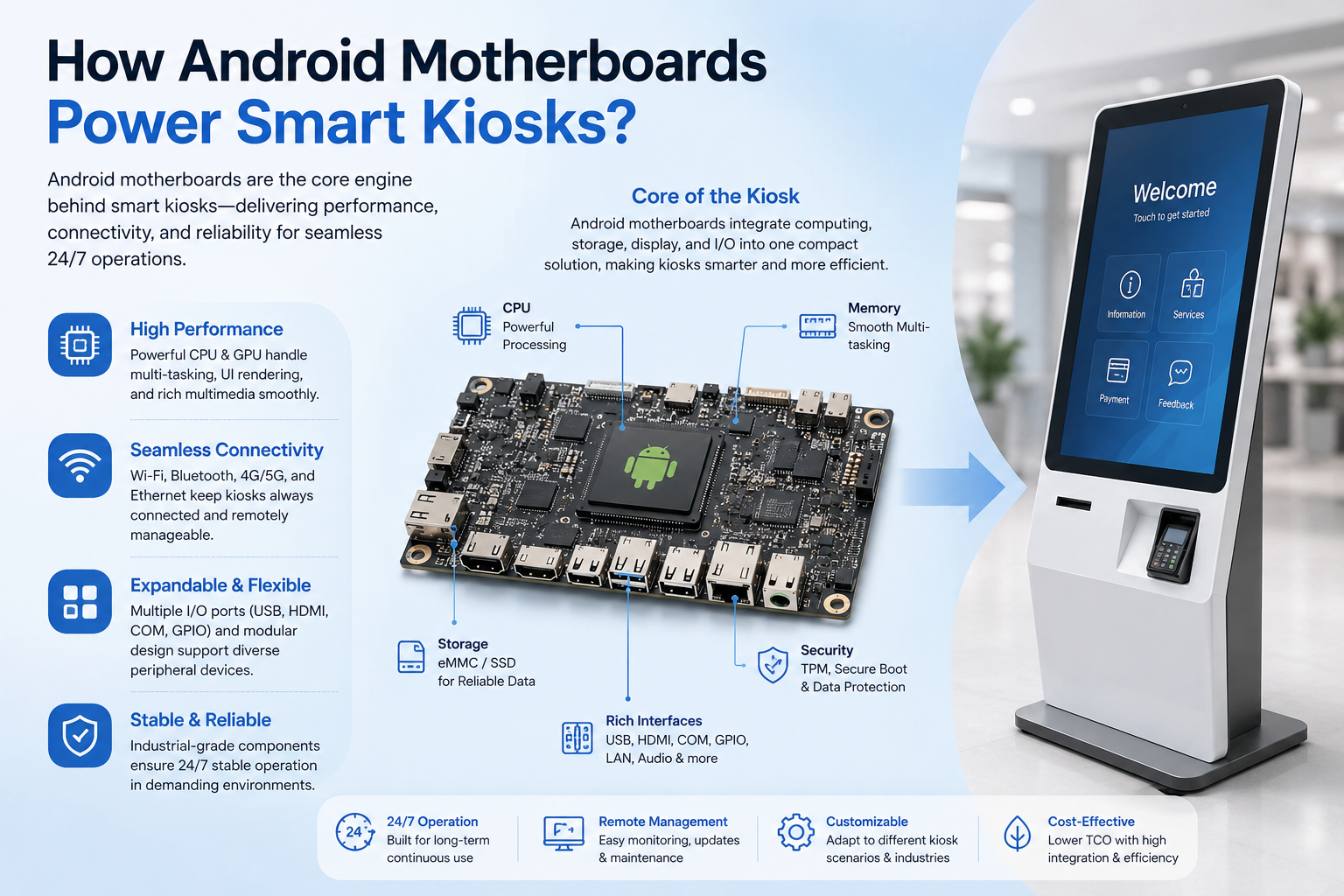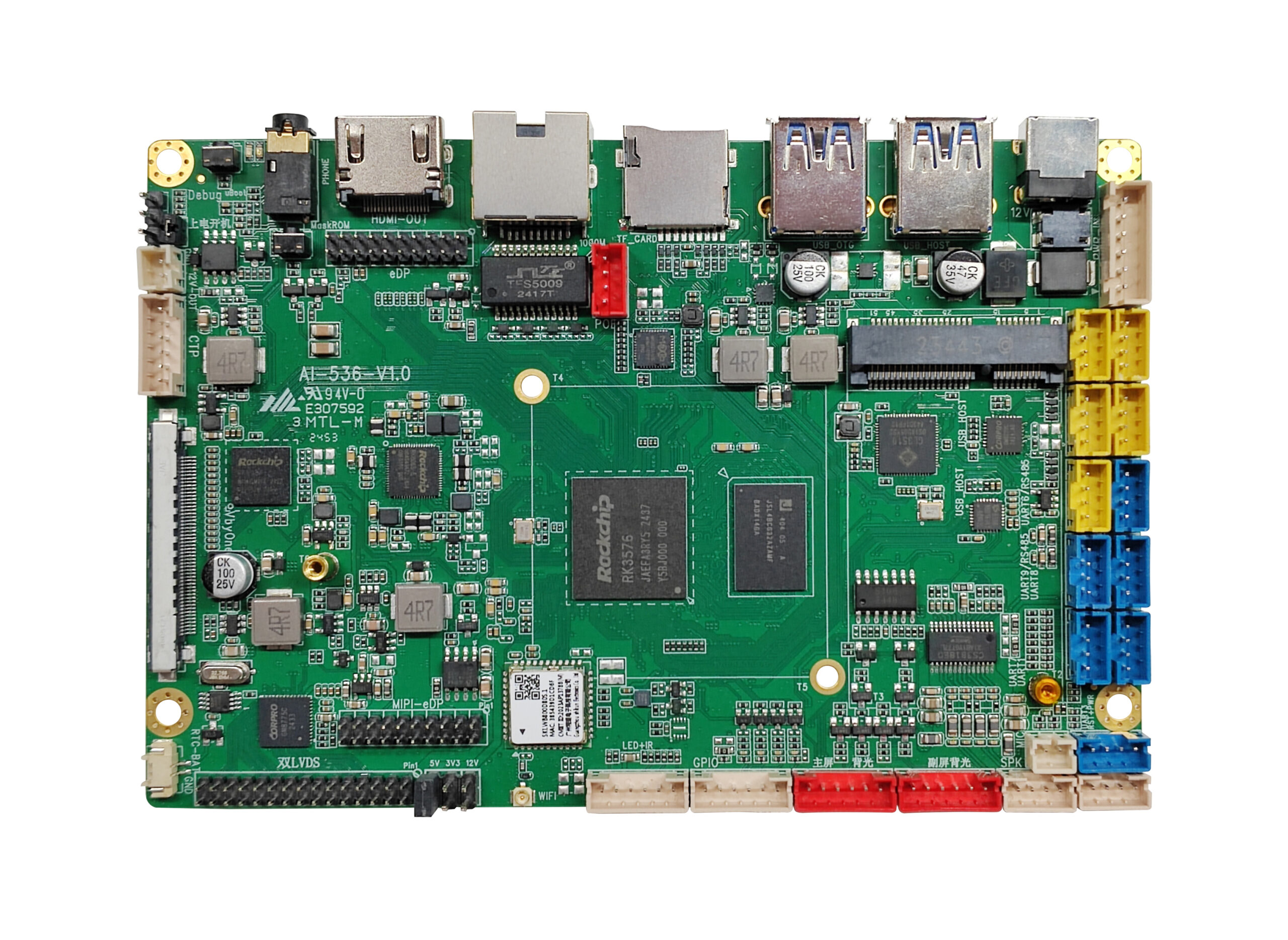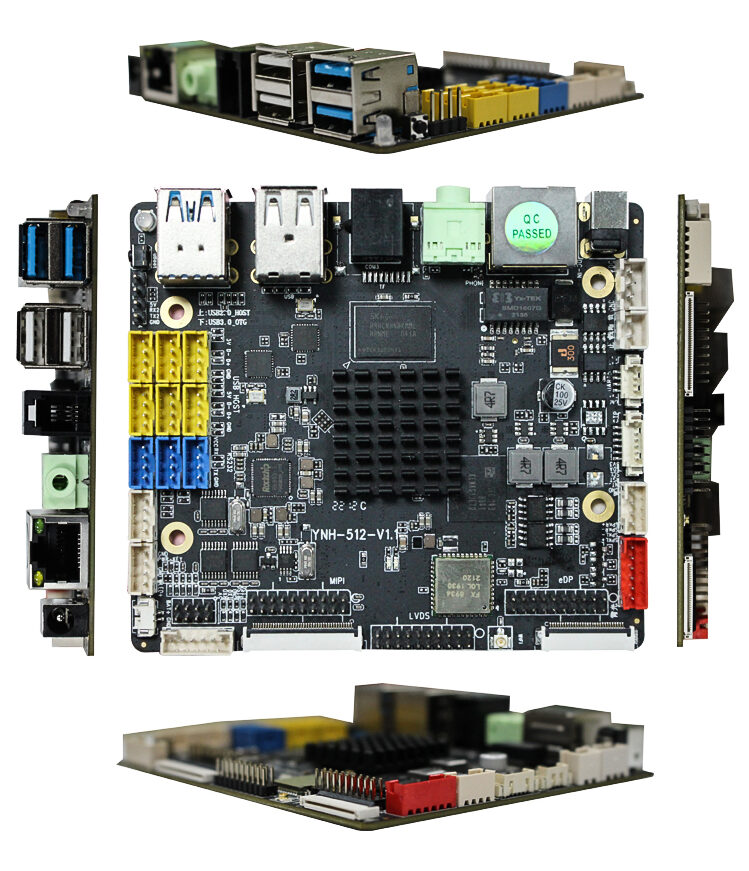
From smart retail terminals and self-service kiosks to industrial control systems and digital signage, modern embedded devices demand more than just basic computing power. They require high efficiency, stable performance, flexible connectivity, and long-term reliability. This is where ARM-based Android motherboards have become increasingly important across commercial and industrial applications.
First Things First: What Is an ARM Motherboard?
Let’s start at the top. A motherboard, at its core, is the central circuit board that ties everything together — the processor, memory, storage interfaces, display outputs, USB ports, wireless radios, and so on. You’re probably familiar with the concept from desktop PCs. An ARM-based motherboard does the same job, but built around a completely different processor architecture.
ARM (originally “Advanced RISC Machine”) is a processor design philosophy built around simplicity and efficiency. Instead of doing a thousand complex things, ARM chips do a smaller set of operations extremely well and extremely fast — which means they generate less heat and sip power rather than gulping it. This makes them ideal for devices that need to run continuously without a fan, without a big power supply, and without generating enough heat to cook your lunch.
when we pair an ARM processor with the Android operating system, we get something genuinely powerful for embedded and commercial applications. Android isn’t just a phone OS. At its core, it’s a robust, battle-tested Linux-based platform with a massive software ecosystem, proven hardware abstraction layers, a familiar UI framework, and — critically — long-term vendor support. Running Android on an ARM.motherboard gives you all of that, packaged into something roughly the size of a thick credit card or a small PCB, drawing as little as 5–15W of power.
The result is a board that can run 24/7 in a commercial kiosk, a digital menu board, a warehouse terminal, or an interactive display — without needing the cooling infrastructure, power budget, or maintenance overhead of a full x86 PC.
Meet the Silicon:
RK3568 and RK3588:When people talk about ARM-based Android boards in the commercial space today, two chipsets come up constantly: the Rockchip RK3568 and the more powerful RK3588.
Rockchip RK3568 — The Workhorse.The RK3568 is a quad-core Cortex-A55 processor that punches well above its price class. It’s built on a 22nm process node, integrates a Mali-G52 GPU, and includes a built-in NPU (Neural Processing Unit) capable of around 0.8 TOPS — which is enough for basic AI inference tasks like face detection or barcode recognition at the edge.
What makes the RK3568 particularly appealing for commercial deployments is its balance of capability and cost-efficiency:
- Display outputs: supports dual display (HDMI + MIPI DSI or LVDS), which is perfect for dual-screen kiosks or signage setups.
- I/O flexibility: includes PCIe 3.0, SATA, USB 3.0, Gigabit Ethernet, and a healthy mix of GPIO, I²C, SPI, and UART — meaning it plays nicely with a wide variety of peripherals and sensors.
- Memory support: up to 8GB LPDDR4/4X RAM with eMMC 5.1 storage options.
- Industrial temperature range: many RK3568 modules are rated for -40°C to 85°C operation, which matters a lot if your deployment environment isn’t a climate-controlled server room.
For applications that need reliable Android 11/12 operation, responsive touch interfaces, and moderate processing demands, the RK3568 is an excellent choice. It’s the chip powering a huge chunk of the commercial digital signage and self-service kiosk market right now, and for good reason.
Rockchip RK3588 — When You Need More Headroom
If the RK3568 is a capable mid-range workhorse, the RK3588 is the performance flagship. This is an octa-core chip combining four Cortex-A76 performance cores with four Cortex-A55 efficiency cores — a big.LITTLE arrangement that gives you serious compute headroom when you need it, without burning power when you don’t.
The headline specs are impressive:
- Up to 32GB LPDDR5 RAM and support for UFS 3.1 storage.
- 6 TOPS NPU — a massive jump over the RK3568, enabling real-time AI tasks like multi-person detection, license plate recognition, or gesture control without offloading to cloud services.
- Up to 8K video decoding and 4K encoding, which matters for high-resolution digital signage and video wall applications.
- Multiple display outputs: can drive up to 4 independent displays simultaneously via a combination of HDMI 2.1, DisplayPort, MIPI DSI, and eDP.
The RK3588 is increasingly showing up in demanding applications: video wall controllers, AI-powered retail analytics platforms, high-end interactive kiosks, and edge computing gateways where you genuinely need the horsepower.
One practical note: the RK3588 does run warmer than the RK3568, so thermal design matters. Most carrier boards designed around it include proper thermal pad contact areas and are intended to be used with a heatsink. Plan for that in your enclosure design.
Digital Signage and Menu Boards
This is probably the most common application. Walk into any modern fast-food restaurant, hotel lobby, or retail store and there’s a reasonable chance that the digital menu board or promotional display running overhead is powered by something very much like what we’re describing here. An ARM-based Android board connects to a commercial display via HDMI or LVDS, runs a content management application in kiosk mode, and pulls updated content from a remote CMS — all while drawing a fraction of the power a desktop PC would require. Multiply that across hundreds of locations, and the energy savings become meaningful.
Self-Service Kiosks and Interactive Terminals
Order kiosks, check-in terminals, wayfinding displays, ticketing machines — all of these benefit from the same architecture. Android provides the touch interface framework, the board provides the compute, and the whole assembly can be locked down to run a single application. The native support for capacitive touchscreens, card readers via USB, and receipt printers via serial or USB makes integration straightforward.
Industrial HMI (Human-Machine Interface) Panels
In manufacturing and process control environments, operators interact with machinery through HMI panels — essentially touchscreen displays that show machine status and accept inputs. ARM Android boards are increasingly used here because they support the wide temperature ranges and long product lifecycles that industrial customers demand. An RK3568-based panel running Android can display real-time sensor data, accept operator commands, and communicate with PLCs over industrial protocols — all from a single compact board.
Video Walls and Multi-Display Setups
The RK3588’s ability to drive multiple independent displays makes it attractive for video wall controllers and multi-screen installations. Rather than running separate media players for each display, a single RK3588 board can manage a 2×2 or 4-screen layout, greatly simplifying the installation and reducing ongoing maintenance overhead.
Edge AI Applications
With the RK3588’s 6 TOPS NPU, there’s a growing category of applications that pair the board with cameras for local AI inference — no cloud round-trip required. Retail foot traffic analytics, occupancy monitoring, PPE detection on factory floors — these are all feasible with the right software stack running on RK3588 hardware. Local inference means lower latency, lower bandwidth costs, and better data privacy.
A Few Practical Consideratio
Before you finalize a design around any of these boards, a few things worth keeping in mind from experience:
BSP (Board Support Package) quality matters enormously
Android on ARM is only as good as the vendor’s kernel and driver work. Look for boards where the manufacturer actively maintains Android builds, publishes source code, and has a track record of releasing security updates. Cheap boards with orphaned software are a support nightmare.
Think about your enclosure early
These boards are designed to be integrated, not run bare. Thermal management, mounting, cable routing, and EMC compliance all need to be considered before you commit to a form factor.
Plan for remote management
Commercial deployments need over-the-air update capability, remote monitoring, and ideally Android MDM (Mobile Device Management) compatibility. Not all boards support this equally well.
Match the chip to the workload
The RK3568 is more than adequate for most digital signage and kiosk work — don’t pay for RK3588 unless you genuinely need the extra compute or display outputs. But if you’re building something AI-heavy or running 4K+ video, the RK3588 headroom is worth it.
Wrapping Up
ARM-based Android motherboards occupy a genuinely useful niche: they’re powerful enough for real commercial applications, efficient enough to run continuously without heroic cooling, and backed by the mature Android ecosystem. The RK3568 and RK3588 represent the current sweet spot in the market — well-supported, broadly deployed, and with a healthy selection of carrier board designs to choose from depending on your form factor and I/O needs.
Whether you’re building digital signage, a customer-facing kiosk, an industrial HMI, or an edge AI deployment, there’s likely an ARM Android board in this family that fits your requirements. The tricky part is navigating the vendor landscape and making sure the software stack is solid.